The problem
Pigeons love Indian cities. A little too much.
Every pool deck, balcony grill and AC ledge in Mumbai has a regular. They come for the water, stay for the view, and leave you a souvenir. Daily.
The mess is not just ugly
Pigeon droppings are acidic and can erode metal and stonework1. Droppings from birds living on human food scraps start out even more acidic2. Your railings, ledges and that nice Kota stone? Not fans.
And the lungs aren't fans either
In susceptible people, inhaled pigeon antigen can cause hypersensitivity pneumonitis, a lung disease that can progress to fibrosis. A Mumbai pulmonologist told the Bombay High Court he was treating at least half a dozen children with it3. Fungal infections like histoplasmosis and cryptococcosis are also linked to droppings, though the risk is rare and mostly for people with weak immunity45.
The rule we live by
Shoo, never hurt.
A pigeon is a living being, full stop. For many families, especially in the Jain and Gujarati communities, feeding pigeons is jeev daya, compassion for all life, and a prayer passed down generations89. We respect that.
It's also the law. The Prevention of Cruelty to Animals Act, 1960 makes it an offence to cause any animal unnecessary pain or suffering, or to kill one in an unnecessarily cruel manner10. So no spikes in bellies, no poison, no glue. Nothing nasty.
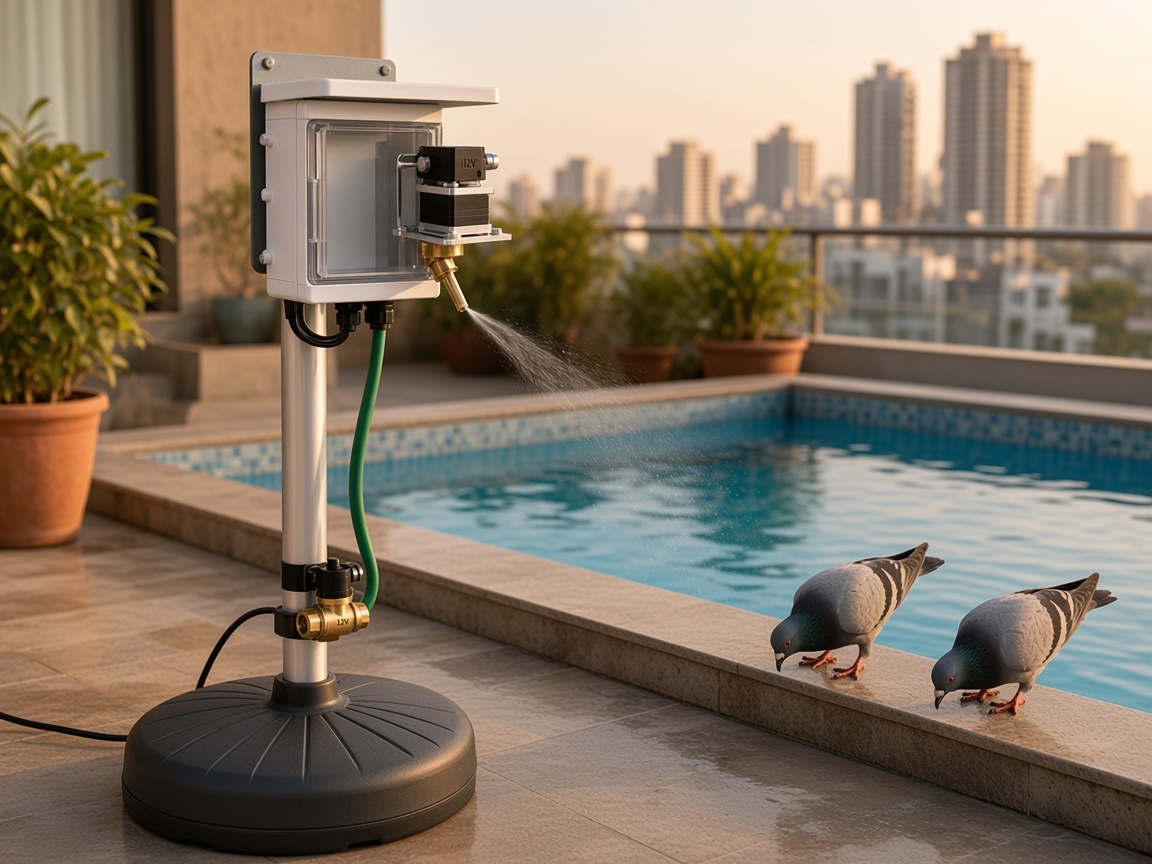
Just water. A splash says “not here, boss” and the bird goes and sits somewhere else.
Honest note: no scare device works forever on its own; birds get used to things. Kabootar Jajaja works best alongside nets or spikes on the edges nobody uses, with the splash guarding the spots you actually want to enjoy, like the pool.